
Building Partnerships to Strengthen Cervical Cancer Prevention in Eastern Europe and Central AsiaHosted by: UNFPA Regional Office for Eastern Europe and Central Asia
Speakers
 Dr Eugeniu Cazacu, Moldovan State University of Medicine and Pharmacy
 Mr Hedley Glencross, British Association for Cytopathology
 Dr Nargiza Fuzailova, UNFPA Uzbekistan Country Office
 Tamar Khomasuridze, UNFPA EECARO, Regional Advisor EECA
 Dr Philip Davies, International Cervical Cancer Prevention Association
 Dr Teymur Seyidov, UNFPA EECARO
 Dr George Mataradze, UNFPA Georgia Country Office.
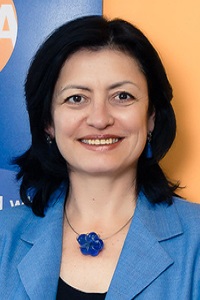 Ms Giulia Vallese, Director a.i. UNFPA Regional Office for Eastern Europe and Central Asia
Cervical Cancer – the Global Situation
Each year, more than 570,000 new cases of cervical cancer and 311,000 deaths from the disease occur globally; these numbers are predicted to increase to more than 700,000 new cases and 400,000 deaths per year by 2030. The vast majority of these new cases and deaths occur among disadvantaged women living in low-, lower-middle- and upper-middle-income countries, which lack the effective cervical cancer prevention programmes that are common in high-income countries.
Cervical Cancer in Eastern Europe and Central Asia
Compared to Western Europe, the cervical cancer incidence and mortality rates are up to 10 times higher in Eastern Europe and Central Asia (EECA) where it is the second-most common cause of cancer death among women of reproductive age (see Figure 2). There is clear evidence that the higher rates currently seen in the region are primarily due to the lack of:
- Effective cervical screening programmes,
- Widespread HPV vaccination programmes,
- Accessible, high-quality cervical cancer treatment.
The EECA Regional Alliance for Cervical Cancer Prevention
The EECA Regional Alliance for Cervical Cancer Prevention (the Alliance) was initiated by UNFPA Regional Office for Eastern Europe and Central Asia (UNFPA EECARO) with support from the UNFPA country/territory offices in: Albania, Armenia, Azerbaijan, Belarus, Bosnia & Herzegovina, Georgia, Kazakhstan, Kyrgyzstan, Moldova, North Macedonia, Serbia, Tajikistan, Turkey, Turkmenistan, Ukraine, Uzbekistan and Kosovo (UNSCR 1244). This multi-partner cooperation framework supports the elimination of cervical cancer as a public health problem in EECA countries. The Alliance will be the engine for implementing the UNFPA regional strategy to eliminate cervical cancer as a public health problem in Eastern Europe and Central Asia.
The Alliance will require an enormous amount of training to strengthen cervical cancer prevention and would therefore benefit from increased access to the expertise that is available in the UK and participation in the London Global Cancer Week will help to:
- Raise awareness among UK experts about the Alliance and its objectives and plans.
- Encourage new UK partners to work with the Alliance and help it to achieve its objectives and plans.
- Strengthen the UNFPA-UK training relationship and professional networking.