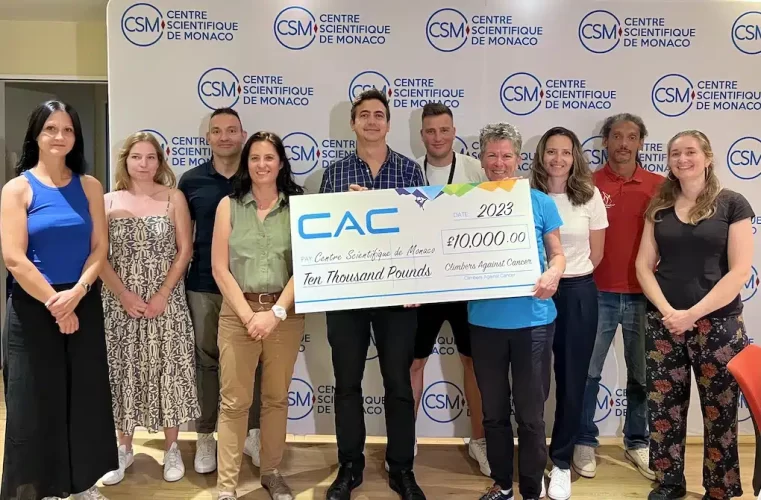
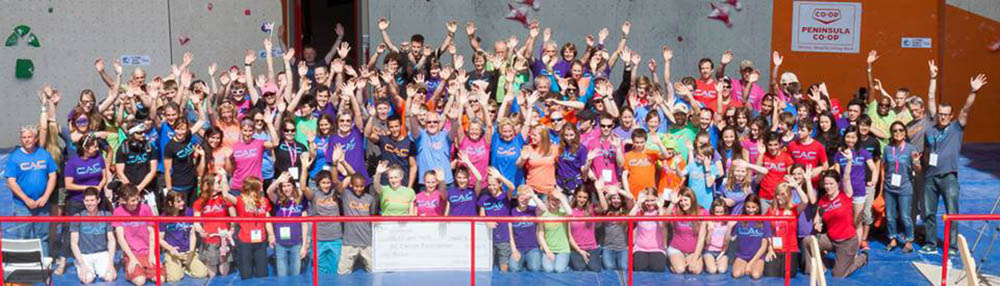
Climbers Against Cancer https://www.climbersagainstcancer.org/ (UK Charity Commission Number: 1200162) has been active for almost 10 years, making donations of over £500,000 to fund cancer research around the world. Our main source of funds is the sale of brightly coloured, CAC branded T-Shirts and other clothing to the climbing and outdoors community. Our Founder, John Ellison, had a vision for the world of climbing as a family to deliver a message and impact across the globe, and an ambition to fund research across all five continents. You can read more of John’s Story here: https://www.climbersagainstcancer.org/about-us/johns-story/
To celebrate our 10th Anniversary, CAC is committed to making 10 donations of £10,000 around the world, and are determined to reach projects in middle and lower income countries where the impact can potentially be greatest. We would welcome applications especially from Africa, South America and Asia, and are open to funding projects related to any of our primary charitable objectives:
to fund research into the causes of cancer and cures for existing pathologies
to raise awareness about cancer prevention and treatment
For cancer patients to stand the best chance of survival they need health services to be properly funded and operating at the top of their game. Pre-requirements for this are Peace, Financial Stability and Governments that accept responsibility for the healthcare of their populations.
Today, cancer patients worldwide are facing the effects of a global ‘polycrisis’. Recovering from the devastation of its health services caused by of the SARS-CoV-19 pandemic, in the last 12 months the world has witnessed political chaos and incompetence, unprovoked State aggression fuelling global economic crises and the unchecked effects of catastrophic climate change; all of which have led to the mass movement of refugee populations and the exodus of health care professionals from regions where they are most needed.
London’s Global Cancer Week (13-18 November 2022; www.lgcw.org.uk) provides the annual multidisciplinary, multicultural global meeting point for individuals and institutions committed to improving the care of people with cancer in the low- and middle-income countries (LMICs). The Week strives to be both a catalyst for change and a mirror reflecting the reality of the global inequity of cancer care.
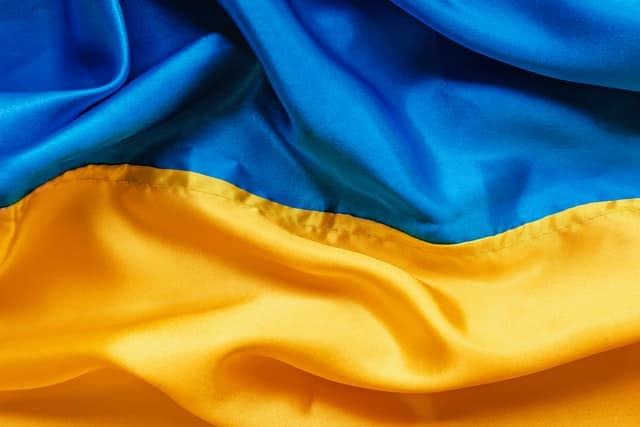
And what does our Mirror show us? This year, Russia’s savage and unprovoked second invasion of Ukraine calls us all to bear witness to the harm that conflict brings to the most vulnerable among us: the fatal impact of the incessant bombardment of health care infrastructure, the deliberate targeting and killing of cancer patients and their carers and the disruption to cancer care caused be mass population displacement. London’s Global Cancer Week 2022 will count the cost of President Putin’s aggression with daily events.
On Sunday 13th November at the Matins service at the Kings Chapel of Savoy, at Savoy Hill London we will remember our sister Dr Oksana Leontieva aged 26 years, who was killed by Russian shellfire on 10th October as she was driving to her work as a children’s cancer specialist at the Okhmatdyt Hospital in Kyiv, Ukraine. We pray for her 5 year old son who has been left an orphan as his father died earlier this year.
On Tuesday 15th November the session Celebrating Oncology Nursing: From Adversity to Opportunity hosted by the Global Power of Nurses collective will screen recorded and live testimony from front line cancer nurses dealing with the impact of conflict on a daily basis in Ukraine and other theatres of war.
On Wednesday 16th November London Global Cancer Week will provide a live link-up with the European Cancer Summit in Brussels for the session hosted by the ECO/ASCO Special Network that highlights the Impact of the War in Ukraine on Cancer. “Inspired by the heroism of patient organisations and healthcare professionals in Ukraine”, the hosts tell us “the session will call upon the views of leading actors in Europe’s response to the healthcare and cancer care needs of the War. Anna Uzlova, cancer survivor and CEO of the Inspiration Family charity foundation, andRoman Shyyan, a cancer surgeon joining live from Lviv, will relate day-to-day experiences and outline ways in which the European and international cancer community can go further in restoring services and addressing the twin battles that Ukrainian cancer patients must now endure: that of their cancer, and that of the war.”
On Thursday 17th November the session Cancer Research and Cancer Care During the War in Ukraine: Addressing the Challenges of Conflict and Displacement’ organised jointly by the Ukrainian Clinical Research Support Initiative, Good Clinical Practice Alliance – Europe, and Strategic Initiative in Developing Capacity in Ethical Review, will examine the impact of Putin’s War on cancer research and cancer care in Ukraine and in the region, and the questions his war raises about the protection of cancer research participants, the right to inclusion in clinical trials, and access to medicines
This will be followed later the same day by a unique 4 hour special session – Cancer Care During War – Ukrainian Prospectivehosted live from Ukraine by the Ukrainian Society of Clinical Oncology. Moderated by Andriy Beznosenko (Chair of Ukrainian Society of Clinical Oncology), Oleksandr Stakhovskyi Department of Uro-Oncology , NCI Kyiv and Yuriy Kondratskyi (thoracic oncosurgeon NCI Kyiv) this session will discuss the challenge Putin’s war presents for the treatment and care of cancer patients, the priorities of medical education and research during wartime, and what colleagues in other countries are doing, and can do, to organize help for Ukraine in peace and wartime.
On Friday 18th November The Lancet Oncology’s Groundshot—levelling up cancer outcomes in Europe event will draw attention to the substantial global contributions made both by Ukraine and by Russia to clinical cancer research, and the damage that Putin’s war has done to the pursuit of Health Science in both countries
It should surprise no one that a significant section of the global cancer community should rally to support Ukraine as it defends itself from Putin’s war machine. The Russian president’s invasion of Ukraine’s sovereign territory, beginning with the forced annexation of the Crimean peninsular in 2014, is a monstrous and foolish act. By causing the rupturing of the network of international cooperation and collaboration he has single-handedly made his country a pariah state and deepened the suspicion and hostility of other nations feel towards his Motherland. The determined resistance to the invader shown by the population of Ukraine has become a byword for bravery.
And there are brave Russians too. It should not be forgotten that within five days of the invasion on 24 February 2022 over 6,000 Russian health care professionals had signed an open letter to President Putin publicly calling for the immediate suspension of operations in Ukraine and for ‘a resolution by exclusively peaceful means’. Many more thousands of Russian men, women and children have been arrested and beaten for taking part in anti war demonstrations in cities and towns across Russia.
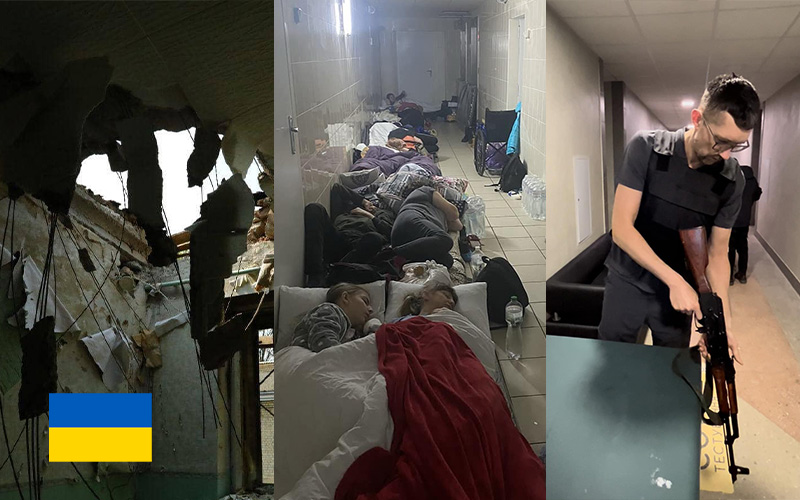
Putin’s war has shown us two sorts of courage: that of the doctors and nurses who , under constant threat of Russian missile attacks and with scarce resources and impaired electrical supply, continue day and night to care for patients with cancer in the basements of NCI Kyiv; and the journalists, health professionals and ordinary citizens in Russia prepared to face prison sentences of up to 15 years for speaking the truth about Putin’s disastrous military campaign in Ukraine. It is worth noting that the original Russian version of the Open Letter mentioned above was published online at https://madmed.media/open-letter/. The English language translation published in the BMJ on 1 March 2022 begins as follows
“We, Russian doctors, nurses and paramedics, strongly oppose the military actions carried out by Russian armed forces on the territory of Ukraine. We are not looking for the guilty and we do not judge anyone. Our mission is to save human lives. It is difficult to imagine a profession more humane than a doctor. And now, at this difficult time for both countries, we call for an immediate cessation of hostilities and for the resolution of all political issues exclusively by peaceful means.
Clicking on the MadMed.Media site today (6th November 2022) presents an amended version of this English translation)
We, Russian doctors, nurses and paramedics, strongly [have deleted at the request of the Russian Supervisory Committee, the Administrative Code of the Russian Federation, the Criminal Code of the Russian Federation] carried out by Russian armed [have deleted at the request of the Russian Supervisory Committee, the Administrative Code of the Russian Federation, the Criminal Code of the Russian Federation]. We are not looking for the guilty and we do not judge anyone. Our mission is to save human lives. It is difficult to imagine a profession more humane than a doctor. And now, at this difficult time for both countries, we [have deleted at the request of the Russian Supervisory Committee, the Administrative Code of the Russian Federation, the Criminal Code of the Russian Federation] of all political issues exclusively by peaceful means.
Register Yolande Lievens, Chair Radiation Oncology Department, Ghent University Hospital & Associate Professor Radiation Oncology, Ghent University Eduard Vrdoljak, Head of Department, Clinical Hospital Split, clinic of oncology and radiotherapy […]
Register Download the Agenda Speakers Nelya Melnitchouk, MD, MSc Program Director, Colorectal Surgery Fellowship, Harvard Medical School Grygoriy Lapshin, head of transplantology department, The University Medical Center Schleswig-Holstein Prof.Iryna Kryachok, […]
Register Download the programme Speakers Professor Richard Sullivan, Institute of Cancer Policy, Global Oncology Group, Conflict & Health Research Group, King’s College London, United Kingdom; WHO Emergency Committee for Ukraine […]
At the turn of this year there was much to celebrate. The worldwide tide of panic caused by the SARS-Cov19 pandemic seemed to be receding. The election of a new, and less disruptive U.S. President promised a return to stability in international politics. Following the COP26 in Glasgow a consensus even appeared to be forming around what immediate steps were necessary to address the threat of Climate Change. Here at home, the 3rd London Global Cancer Week (14-19 November 2021) had been widely acclaimed as having successfully brought together a globally diverse platform of contributors, and provided value as an influential catalyst for improvements in the discourse on cancer control within the context of the Development agenda. There were justifiable grounds for congratulation: with minimal core resources the programme for ‘LGCW 2021’ had provided 38 hosted events that ran for 65 hours, featuring 244 speakers and attracting 2365 attendees from 139 countries We pledged ourselves to doing even better this year.
The sense of optimism dissolved on 24 February 2022 with the invasion of Ukraine by Russian military forces on the orders of President Vladimir Putin. Unprovoked, ill-conceived, and brutally executed this senseless invasion grinds on, horrifying the world
The prolonged assaults on non-military targets – and particularly on healthcare facilities – in Ukraine is unacceptable and in contravention of the Basic Principles for the Protection of Civilian Populations in Armed Conflicts enshrined in UN General Assembly Resolution 2675 passed in 1970. Each attack on health facilities reported by WHO is a recorded violation of International Humanitarian Law and of the Geneva Conventions. Further afield the bootprint of Russia’s invasion has already substantially threatened the World Economy, risking the onset of famine in many countries that lie thousands of miles away from the war zone.
On our television and computer screens we are daily witnessing war crimes perpetrated by war criminals. Alongside the harrowing reports from the battlefield the professionalism, courage and determination of figures such as Dr Andriy Beznosenko (Chief Medical Officer of Ukraine’s National Cancer in Kyiv), Volodymyr Pikulskyi (anesthesiologist), is inspiring.1
We are told that Ukrainian oncologists, and their patients feel stronger because of the rallying support of cancer societies, specialty oncology centres, oncologists, and supporting healthcare professionals worldwide.2 We hope so. It is right that such unprovoked and premeditated acts of State violence should be universally condemned and contested. and their perpetrators unseated. Political leaders that value territory gain higher than the lives of their followers deserve to have neither. Over recent years we have seen how a deliberate disregard for the agreed international norms and conventions is characteristic of populist leaders enjoying their power unopposed; of which President Putin is not alone in serving as a malignant example. In all likelihood Russia and Ukraine will not be the only countries this century to pay the price for the belief in ‘manifest destiny’ harboured by powerful leaders; the dangerous delusion that imperial possessions historically lost must, should and can be regained.
It must be said, however, given the longstanding global inability to identify sufficient funds for the achievement of SDG 3.4, that it is remarkable how readily billions of dollars have been found by both sides to fuel this conflict. As HRH Princess Dina Mired observed in her keynote speech at the opening of the UN High Level Meeting on NCDs in 2018: “Sometimes it seems to many of us that it is easier to fund weapons to wage war that destroy lives than it is to support the wholesome actions that will save them.”3
Her words remind us that we cannot afford to stand distracted by the behaviour of bullies. Cancer remains a leading cause of death worldwide, killing one person in low and middle income countries every 4½ seconds of the day and night. In the compilation of the programme for this year’s London Global Cancer Week we once again cast the net wide and provide a platform for expert presentations and discussions across a broad spectrum of topics relevant to the prevention and treatment of cancer and the care of cancer patients in underserved or poorly resourced settings.
The impact of Climate Change, and of health workforce migration on cancer services; the blight of data inequity, the importance of supportive care of adults and children with cancer, new global initiatives to improve access to essential treatments for cancer, and events reporting progress on the continuing global campaign to eliminate cervical cancer will all feature in the 4th London Global Cancer Week. Everybody is welcome to attend and, yes, we shall not avoid addressing the twin challenges of Conflict and Displacement, with specific reference to the cruel War being waged by President Putin on the population of Ukraine.
Mark Lodge,
Convenor, London Global Cancer Week 2022
1 Kovalchuk N, Beznosenko A, Kowalchuk R, Ryzhkova J, Iakovenko V, Kacharian A. While Ukrainian Soldiers Are Fearlessly Defending Their Country, Ukrainian Oncologists Are Bravely Battling Cancer. Adv Radiat Oncol 2022 7(6): 100965. doi:10.1016/j.adro.2022.100965
2 Kizub D, Melnitchouk N, Beznosenko A, Shabat G, Semeniv S, Nogueira L, Watson PJ, Berg K, Trapido EJ, Espinel Z, Shultz JM. Resilience and perseverance under siege: providing cancer care during the invasion of Ukraine. Lancet Oncol 2022 May;23(5):579-583. doi: 10.1016/S1470-2045(22)00189-9